In the high-stakes realm of modern pro-level oversteer competition, victory is far more than solely a product of sheer horsepower or behind-the-wheel bravado. Rather, it is now a complex discipline which demands a meticulous marriage of picking a proven vehicle platform, arming it with the highest-quality drift-spec parts, and, most importantly, comprehending its live behavior on the circuit through sophisticated drift telemetry software. This exhaustive handbook acts as your master plan starting from the initial concept of a project car right through to the last engineering-refined adjustments that transform a capable car into a predictable champion. We will examine in detail the art and science of vehicle alignment optimization, illustrating how a advanced suspension tuning tool like a dedicated telemetry system removes assumptions and delivers unmatched visibility into your car's actual behavior.
The cornerstone of any exceptional drift machine is, undoubtedly, the platform itself. A select group of cars have earned iconic reputation within the worldwide drifting community due to their inherent balance, robust design, and the vast ecosystem of aftermarket components available. Picking the optimal car is the initial and most crucial decision a builder will make. To illustrate, the the E36 generation BMW is commonly accepted as among the finest all-around cars for drifting of the modern era. Its almost ideal balanced front-to-rear weight, combined with a rear-wheel-drive setup and robust straight-six engines, forms a car that is at once accessible for beginners and incredibly effective in the control of a professional competitor. The successor of this lineage, the BMW E46 platform, improves on these strengths with a even more sophisticated chassis, increased wheel track for enhanced confidence, and still more turning capability directly from the factory. A distinct powerful option in the pro arena is the Chevrolet Corvette C6.
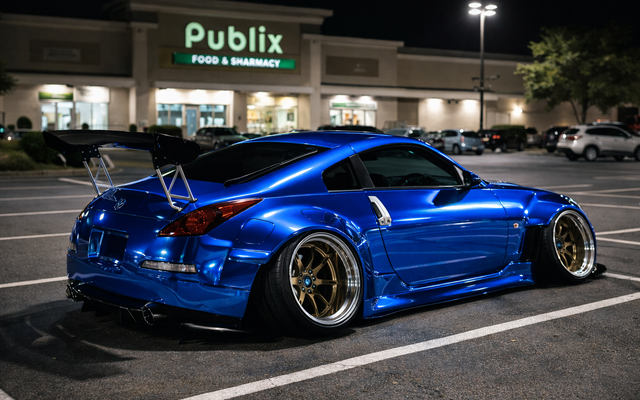
This muscle-derived performance car offers a distinctive set of benefits to the drifting discipline, including a low-mass aluminum structure, a rear-mounted drivetrain component that aids in an perfect balance, and the colossal low-end power of a powerful LS V8 motor. This fusion makes it an complete weapon on track, able of entering and holding continuous slides with seemingly easy deployment of throttle. For builders desiring outstanding performance per dollar, the Nissan 350Z rises above as a excellent example. It comes from the manufacturer with a stiff body structure, a decent factory LSD, and the responsive VQ35DE powerplant that delivers ample horsepower and torque for practicing and moving up in the sport. Its newer version, the Nissan 370Z, presents additional advancements in chassis stiffness, suspension design, and peak powerplant output, solidifying its status as a common choice among competitive pilots. Additional legendary vehicles that warrant mention include the nimble Wankel-engined Mazda FC, the ubiquitous Nissan S13, the torque-rich Ford SN95, the electronic-equipped BMW E90, and the small yet surprisingly playful and teachable Mazda Miata. Every single one of these chassis gives a distinct array of characteristics, difficulties, and capabilities, but they all possess the basic components essential to serve as a serious sliding vehicle.
However, picking the optimal platform is just the starting point. To access the complete performance of every of these machines, substantial modifications to the steering and suspension systems are absolutely non-negotiable. This is where the domain of performance drift-spec hardware becomes vital importance. The most most impactful modification for a serious drift machine is the fitting of a high-performance steering angle kit. These sophisticated kits, for example those manufactured by performance brands like SLR Speed, are engineered to radically increase the vehicle's possible lock-to-lock rotation. A factory road car is highly constrained in how far its front wheels can rotate, a design limitation for daily use. In sliding, but, maximum countersteering is frequently necessary to catch and sustain a drift. An angle kit exchanges the OEM uprights, tie rods, and often control arms with pieces that enable the wheels to reach degrees of turn over 70 or even 80 °, versus a typical stock setting of around 40 to 50 °.
This immensely greater lock provides the pilot with exponentially enhanced control during a angle, allowing it to be considerably simpler to initiate a drift, sustain it through a extended corner, and switch smoothly from one angle to another. The contrast in drivability is truly profound. Combined with a properly selected modification is the every bit as critical enhancement to the chassis's damping system. Off-the-shelf or even expensive street coilovers are generally not designed for the particular and brutal demands of drifting. A drift-spec system of adjustable dampers is paramount. These specific suspension components feature specific valving and spring stiffness that are designed for the rapid mass transition that is characteristic of sliding. When a driver starts a angle, the vehicle's mass is transferred forcefully to the outside of the corner. Proper competition coilovers control this shift in a controllable fashion, permitting the vehicle to stabilize rapidly and offering the operator precise feel through the wheel and driver's seat. They additionally provide precise adjustment of ground clearance, shock absorber firmness, and weight balance, which are all integral aspects of dialing in the car's dynamics to a specific circuit or piloting technique. As a system, a high-quality drift angle kit and a correctly specified system of performance coilovers constitute the undeniable mechanical cornerstone upon which all subsequent optimization is built.
Once the fundamental components is installed, the next critical phase in the build is the meticulous adjustment of the vehicle's alignment. This is the realm of car suspension tuning, a process that can seem daunting to the uninitiated but is, in practice, the defining factor to turning a assembly of high-performance components into a cohesive and predictable whole. The most critical parameter of suspension geometry for sliding is undoubtedly camber. Wheel camber is the inclination of the tire in relation to the vertical axis when viewed from the forward of the chassis. When the upper part of the wheel is leaning towards the car, this is known as camber-in. For oversteer driving, inward-leaning wheels on the steering wheels is universally applied and is seen as necessary. The reason is deeply tied to vehicle dynamics.
When a vehicle is cornering at limit slip angles, the body tilts towards the outside of the bend. This chassis roll causes the outer steering tire to lose its best footprint with the tarmac. By introducing inward lean, the tire is pre-angled to account for this tilt. As the car tilts into the turn, the tire gains a better contact patch on the road surface, increasing its grip at the critical moment when it is absolutely essential for steering authority. Commonly, front axle camber settings for a dedicated drift machine range from approximately -3 degrees to as extreme as -5 degrees or even more, based on the specifics of the car geometry, rubber drift tuning app type, and driver feel. The rear wheels also employ negative camber, but the settings are typically less and more nuanced than the front. Too much camber at the rear can result in the chassis overly prone to oversteer and difficult to manage on acceleration application, as it diminishes the usable contact patch of the powered tires during straight-line power delivery. Hence, rear angles are commonly in the range of -1 degree to -3 degrees, finding a precise balance between providing sufficient lateral grip to help in starting and sustaining the drift while also keeping effective traction for acceleration the bend. Camber is only one part of the more complex alignment picture, which additionally encompasses toe setting, self-centering steering, and bump steer correction.
Toe angle describes the orientation of the tires when looked at from above. Toe-in means the front edges of the wheels are closer together than the rear edges, while outward toe means the reverse. For sliding, a modest amount of front axle negative toe is commonly run to sharpen the turn-in handling reaction, making the vehicle feel more nimble and willing to start a drift. Rear axle toe setting is usually set to neutral or a extremely small amount of inward toe to encourage predictability under power. caster angle is the frontwards or backwards angle of the kingpin axis when looked at from the side of the vehicle. Positive caster increases self-centering and stability solidity, and it furthermore boosts inward lean increase during turning, which is highly beneficial. Adjusting these parameters is a complex dance where a modification to a single parameter can and will influence the remaining parameters. The conventional approach for dialing in a car's suspension geometry for competition has for a long time been a time-consuming process of trial and error. A tuner or engineering group would apply a change based on experience, run the vehicle on track, rely on the driver's individual sensation and feedback, and then introduce a further change. This cycle would iterate again and again until the car felt "acceptable" or the scheduled testing session was exhausted. This methodology is not only exceptionally slow in terms of time and resources, but it is furthermore inherently imprecise.
Driver feel is a famously inconsistent data source, affected by numerous elements such as tiredness, changing track grip levels, ambient heat, and merely the mindset of the driver on that specific day. What feels "oversteery" on one lap might feel "understeery" on the next run, leading to conflicting information and counterproductive tweaks. This traditional challenge in chassis setup is specifically where modern technology has stepped in to revolutionize the methodology.
The development and application of sophisticated vehicle dynamics tools has introduced a completely new age for building and optimizing competitive sliding vehicles. This new generation of tools, exemplified by innovative systems drift telemetry software like modern telemetry hardware, operate by drift suspension tuning guide physically measuring the live mechanical behavior of the chassis as it is being driven on the track. Unlike using subjective feedback, these systems gather quantifiable data on essential variables such as suspension travel, corner velocities, G-force loading, wheel angle, and driver input application. This collected data stream is then interpreted by powerful algorithms that can plot and interpret the data in a actionable manner. For the first time ever, tuners and teams can observe exactly what the car is performing at each millisecond of a drift. This ability revolutionizes the whole chassis setup process. Imagine the aforementioned challenge of dialing in the front camber for a specific chassis. Rather than introducing a modification from -3 degrees to -3.5 degrees and then running multiple laps to try and "feel" a difference, a vehicle dynamics tool can give instant and clear feedback. The software can show visually how the tire's contact patch is behaving during the key moments of a angle: the initial flick, holding the angle, and transition. It can reveal if the existing angle is allowing the loaded tire to keep maximum contact or if the compound is working inefficiently on its external shoulder.
The system can then suggest empirical suggestions for adjustment. Perhaps the information indicates that the tire is even overloading its sidewall at -3.5 degrees of negative camber, indicating that even more angle, say -4 degrees, might be advantageous. Conversely, the information might show that the tread is not achieving optimal operating temp or that the inner edge is wearing unevenly, which could suggest that there is overly aggressive inward lean and a modest decrease back to -3.2 degrees would be more ideal. This standard of precision and practical insight was literally impossible in the days of exclusively mechanical tuning.
The effect of employing a comprehensive drift telemetry system extends well beyond only optimizing camber. It serves as an essential coilover setup tips that is customized to your particular car. When adjusting the rebound and compression clickers on your coilovers, instead of depending on imprecise tips or mimicking another team's settings, you can utilize the data to observe how the car is reacting in relation to your changes. The tool can display the wheel movement data over a section of track, highlighting if the coilovers are controlling the weight transfer effectively or if they are allowing the car to bounce excessively after a direction change. It can assist in identifying issues like hitting the bump stops or losing droop, allowing you to make informed adjustments to preload settings, damping values, or stance. This methodology translates equally to the detailed process of suspension geometry optimization. Beyond camber angle, the software can give data into how changes to toe and caster angle are impacting the vehicle's handling during different parts of a slide. For instance, it can assist you to find the ideal amount of front axle toe-out for your individual steering rack geometry and piloting approach by measuring the response time of initial response and the stability of the car at lock steering angle. This turns the software an extremely useful vehicle dynamics manual that is constantly updated by the real-world dynamics of your own car on the circuit. It elevates the entire process from a subjective skill into a repeatable engineering process.
Furthermore, the value of a platform like data acquisition is in no way limited to professional engineers with vast budgets. For the grassroots driver, it serves as an amazing equalizer. It in essence gives the builder with the insight of a professional race engineer without the associated overhead. It drastically shortens the tuning process by delivering definitive solutions to questions that would otherwise take seasons of trial and error to understand. A driver can see how their particular chassis behaves to various settings, developing a deeper understanding of suspension theory in the endeavor. It additionally democratizes professional performance tuning principles, allowing all drivers with the desire to perfect their vehicle to do so in a systematic and productive fashion. This is particularly valuable in a discipline like oversteer competition, where setup know-how has in the past been a tightly held commodity among elite crews. Now, that capability can be in the toolkit of any dedicated builder.
In conclusion, the path to engineering and optimizing the ultimate high-performance drift car is a multi-faceted mission that perfectly blends proven engineering principles with cutting-edge data technology. It starts with the wise pick of a proven chassis, then enhanced by the integration of essential drift-spec hardware like drift-spec drift angle kits and expertly selected performance coilovers. The process then advances into the detailed realm of alignment optimization, where settings like camber, toe setting, and caster angle are carefully set to match the chassis's new capabilities and the driver's personal needs. Ultimately, and what truly separates the today's methodology from the past, is the use of a advanced vehicle dynamics tool. This tool eradicates the uncertainty and inefficiency of purely feel-based setup by providing quantifiable, actual information on how the vehicle is truly performing. It serves as an incredible engineering partner, a definitive drift suspension tuning guide, and a all-in-one performance analyzer. As a complete package, this holistic approach leads to that every element of the competition vehicle—from the selection of the chassis to the most minute click on the coilover—is perfected for maximum success on the track. It represents the complete evolution of the discipline of oversteer driving, bridging raw driving skill with surgical suspension engineering to create the ultimate competitive vehicles attainable.